Why I Built An Epoxy Resin Calculator?
If you’ve searched for an epoxy resin calculator or a resin calculator, chances are you’ve already made the same mistake I did.
You mixed too much.
Or worse-you didn’t mix enough.

A few milliliters doesn’t sound like a big deal until you’re halfway through pouring a mold, the resin starts curing inside the mixing cup, and you realize you’re short. Now you have to rush to mix another batch, hoping the second pour blends seamlessly with the first.
I’ve been there more times than I’d like to admit. Ironically, calculating resin isn’t difficult. The formulas are simple. The real challenge is that every project introduces another variable: different mixing ratios, different mold sizes, different resin densities, different units, and different manufacturers.
That’s exactly why I ended up building Resin Calculator Master.
(Not because I wanted another calculator. Because I was tired of making expensive mistakes.)

The Biggest Problem Isn’t Mixing Ratio
When people search for a resin calculator, most expect one simple feature:
“Enter a ratio. Get Part A and Part B.”
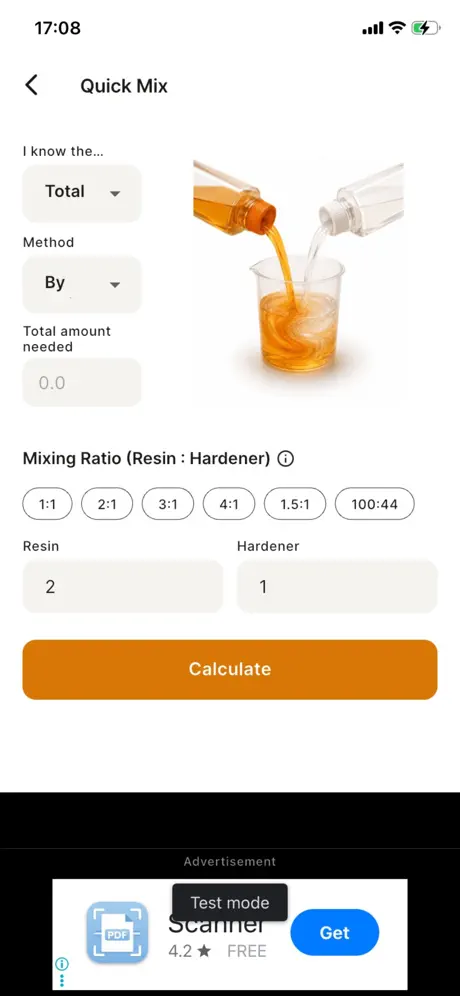
That certainly helps, but after talking with hobbyists and experienced resin artists alike, I realized the ratio itself isn’t usually what causes problems. The real issue is knowing how much resin you actually need before you even start mixing.

Imagine you’re making:
- a river table
- a serving tray
- silicone molds
- jewelry pendants
- coasters
- dice molds
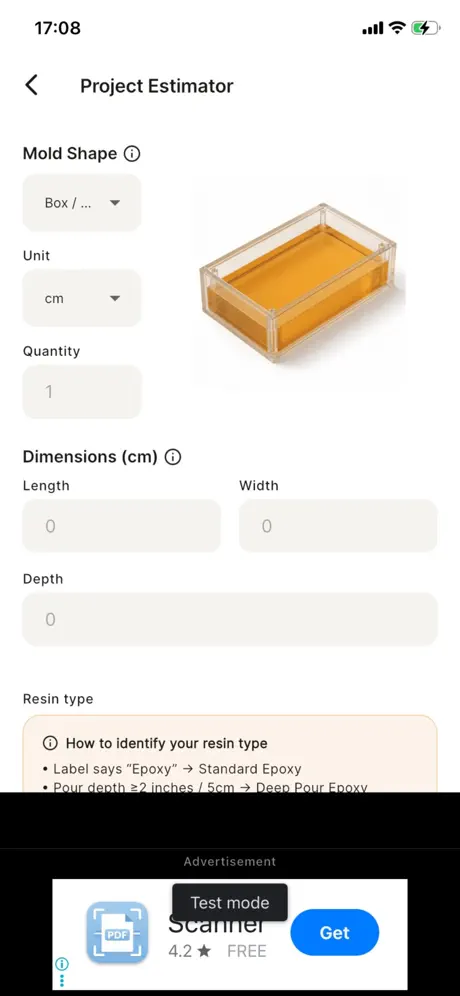
Every project has a different volume.
- Some molds are cylindrical.
- Others are rectangular.
- Some are half-spheres.
- Some are irregular shapes that require estimating.
Without knowing the total volume first, even the most accurate mix ratio becomes meaningless. That’s why an art resin calculator should solve two questions instead of one:
- How much resin does this project require?
- Once I know that amount, how much Part A and Part B should I mix?
Those are two completely different calculations.
Small Errors Become Expensive
Resin isn’t cheap. Depending on the brand, wasting just 150–200 ml every weekend quickly adds up over a year.
I learned this the hard way.
Early on, I always added “a little extra” because I was afraid of running out. Sometimes that worked. More often, I finished the project with half a cup of perfectly good resin hardening in the mixing container.
That extra resin couldn’t be reused. It simply became trash. On larger pours, overestimating by only 10% could easily mean throwing away $10–30 worth of material in a single session. Multiply that by dozens of projects, and suddenly a simple calculation matters much more than people think.
Weight or Volume? This Confuses Almost Everyone
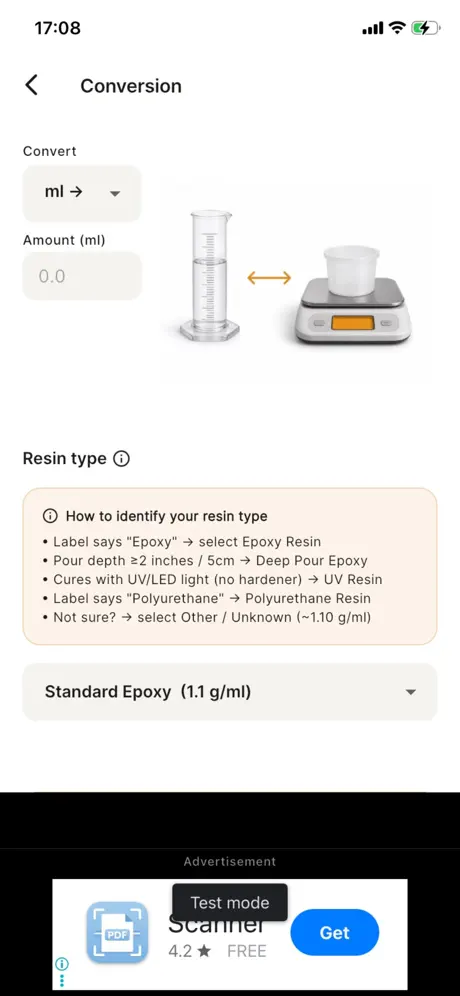
Another surprisingly common issue appears after buying resin from different manufacturers. Some brands specify mixing ratios by weight. Others specify them by volume. Unfortunately, measuring cups are almost always marked in milliliters, while digital scales measure grams.
People naturally assume:
100 ml equals 100 grams.
For water, that’s close enough.
For resin, it usually isn’t. Every resin has its own density. That means 100 ml of one epoxy product may weigh noticeably more-or less-than another. This is one reason many users specifically search for an epoxy resin calculator in ml, hoping to avoid manual conversions.
After making this mistake myself several times, I realized a proper calculator shouldn’t force people to open another conversion website halfway through a project. Everything should happen in one place.
Why Existing Resin Calculators Still Felt Incomplete
There are plenty of online calculators available. Many work perfectly fine, for one specific task.
- Some calculate ratios.
- Some estimate mold volume.
- Some convert units.
The problem is that real resin work rarely follows a single calculation.
A typical project often looks like this:
- Estimate mold volume.
- Add a small waste allowance.
- Convert volume into weight.
- Split resin into Part A and Part B.
- Set timers for mixing and curing.
- Save the settings because you’ll probably make the same project again next week.
Instead of opening five different tools, I wanted one workflow that matched how people actually work at the craft table. That became the foundation of Resin Calculator Master.

Common Mistakes I See Again and Again
After releasing the app and talking with users, I noticed that the same mistakes kept coming up. They weren’t beginner mistakes, they were mistakes almost everyone makes eventually.
1. Guessing instead of calculating
“I think 500 ml should be enough.”
That sentence has probably wasted more resin than anything else. Even if you’ve made a similar project before, small changes in dimensions can significantly affect the total volume. A coaster that’s 5 mm thicker or a tray that’s slightly larger can require much more resin than expected. That’s why using a proper resin volume calculator before opening the bottles saves both time and money.
2. Forgetting the resin left behind
Most online calculators assume every drop of mixed resin ends up in your mold. In reality, it doesn’t. Some resin sticks to the mixing cup. Some stays on the stirring stick. Some is lost while pouring. Depending on your project, that waste can easily reach 5–10%. I intentionally added a configurable waste factor to the Project Estimator because I wanted calculations to reflect what actually happens in a workshop, not what looks perfect on paper.

3. Switching between brands
Not every epoxy system behaves the same. One brand might use a 1:1 ratio by volume. Another could require 2:1. Industrial casting resin might use something like 100:30 by weight. After changing brands a few times, I realized I was constantly looking up product labels and re-entering the same information. That’s why Brand Profiles became one of my favorite features-you save the ratio and density once, then reuse them whenever you start a new project.
Why I Added Mixing Timers
One feature people often don’t expect in a calculator is a timer. At first, I didn’t think I needed one either. Then I remembered how often I’d start mixing resin, get distracted by a message or another task, and completely lose track of time.

Resin gives you a limited working window, often called the pot life. Mix too briefly and the components may not combine properly. Mix for too long and you lose valuable working time before pouring. The Mixing Assistant isn’t just a countdown clock. It walks through an entire resin session:
- Prepare materials
- Measure both components
- Mix thoroughly
- Degas if needed
- Pour carefully
- Wait for curing
It even sends a reminder shortly before each stage ends, so you don’t have to keep staring at the screen. It may seem like a small feature, but it’s one of those quality-of-life improvements that quickly becomes part of your workflow.
Why Everything Works Offline
This was a deliberate decision from the beginning. When I’m working with resin, my hands are usually covered in gloves, there’s dust in the workshop, and sometimes Wi-Fi isn’t reliable. The last thing I want is to wait for a webpage to load just to calculate a mix ratio.
Every calculation in Resin Calculator Master runs entirely on your iPhone. No account. No login. No internet connection. Your saved molds, resin brands, and calculation history stay on your device. For a tool that’s meant to sit beside your mixing cups, offline reliability simply made more sense.
More Than Just an Epoxy Resin Calculator App
When people discover the app, they sometimes describe it as an epoxy resin calculator app, which is absolutely fair, it does calculate resin ratios accurately. But over time, I realized that’s only one piece of the puzzle. My goal wasn’t to build another calculator resin tool that performs a single formula. I wanted something that supports an entire resin workflow, from estimating mold volume to converting between weight and volume, guiding the mixing process, and helping users avoid repeating the same setup work for every project.

Whether you’re making jewelry, coasters, river tables, keychains, or large casting projects, the calculations should disappear into the background so you can focus on creating.
Final Thoughts
Building with resin is one of those hobbies where experience matters, but even experienced makers still reach for calculators. Not because the math is difficult. Because resin is expensive, timing is critical, and mistakes are usually irreversible.
That’s exactly why I built Resin Calculator Master. It started as a personal utility that saved me from wasting materials and second-guessing measurements. Today, it’s a complete toolkit that combines an epoxy resin calculator, art resin calculator, resin art calculator, mold volume estimator, weight/volume converter, mixing assistant, and reusable project profiles into a single app.

If you’re looking for a faster, more reliable way to calculate resin without juggling multiple websites and spreadsheets, I hope it saves you as much time, and as much wasted epoxy, as it has saved me.
You can download Resin Calculator Master on the App Store and start using the free features immediately. Whether you’re mixing your first 50 ml batch or planning a large casting project, having the right numbers before you pour can make all the difference.